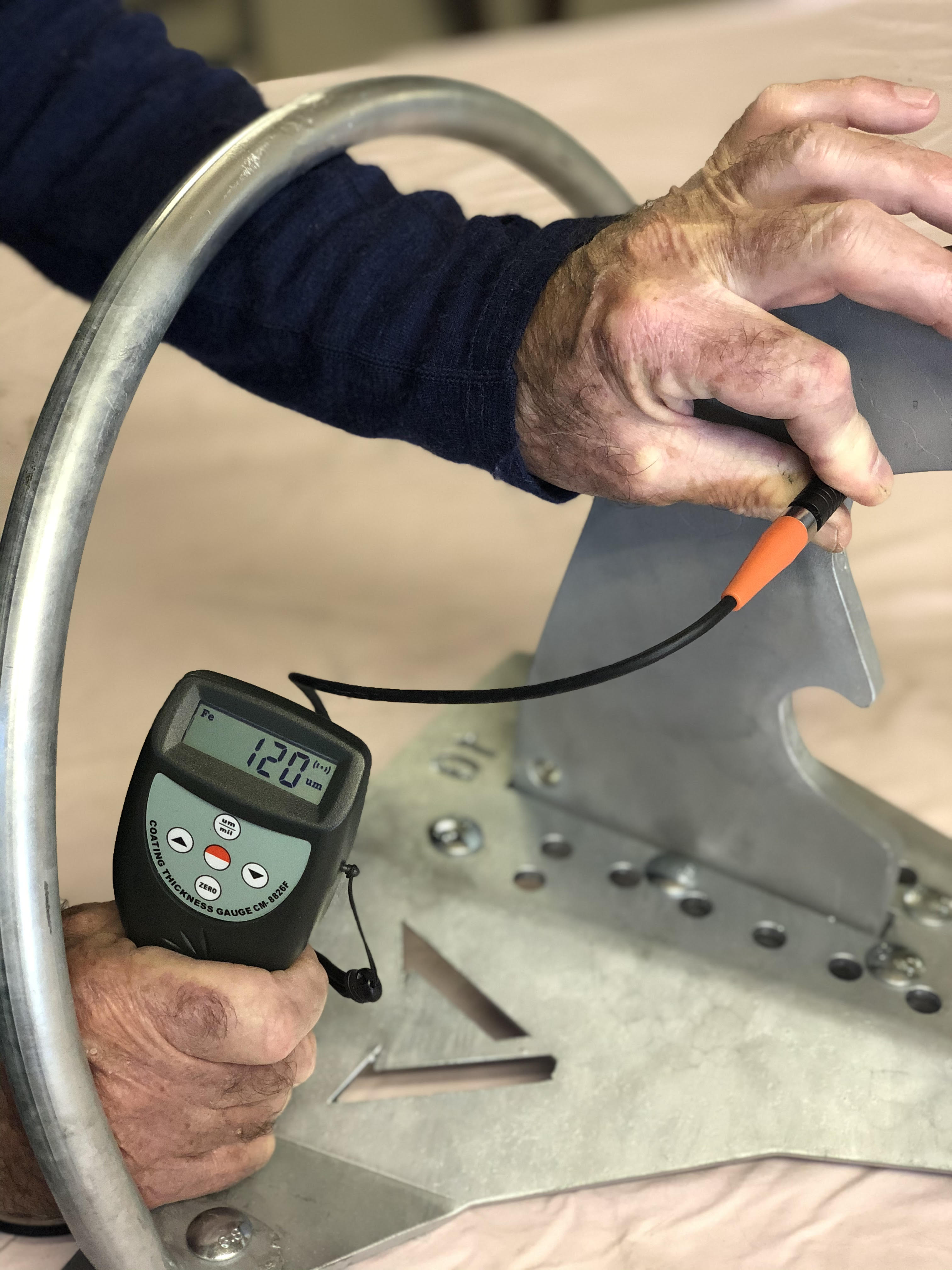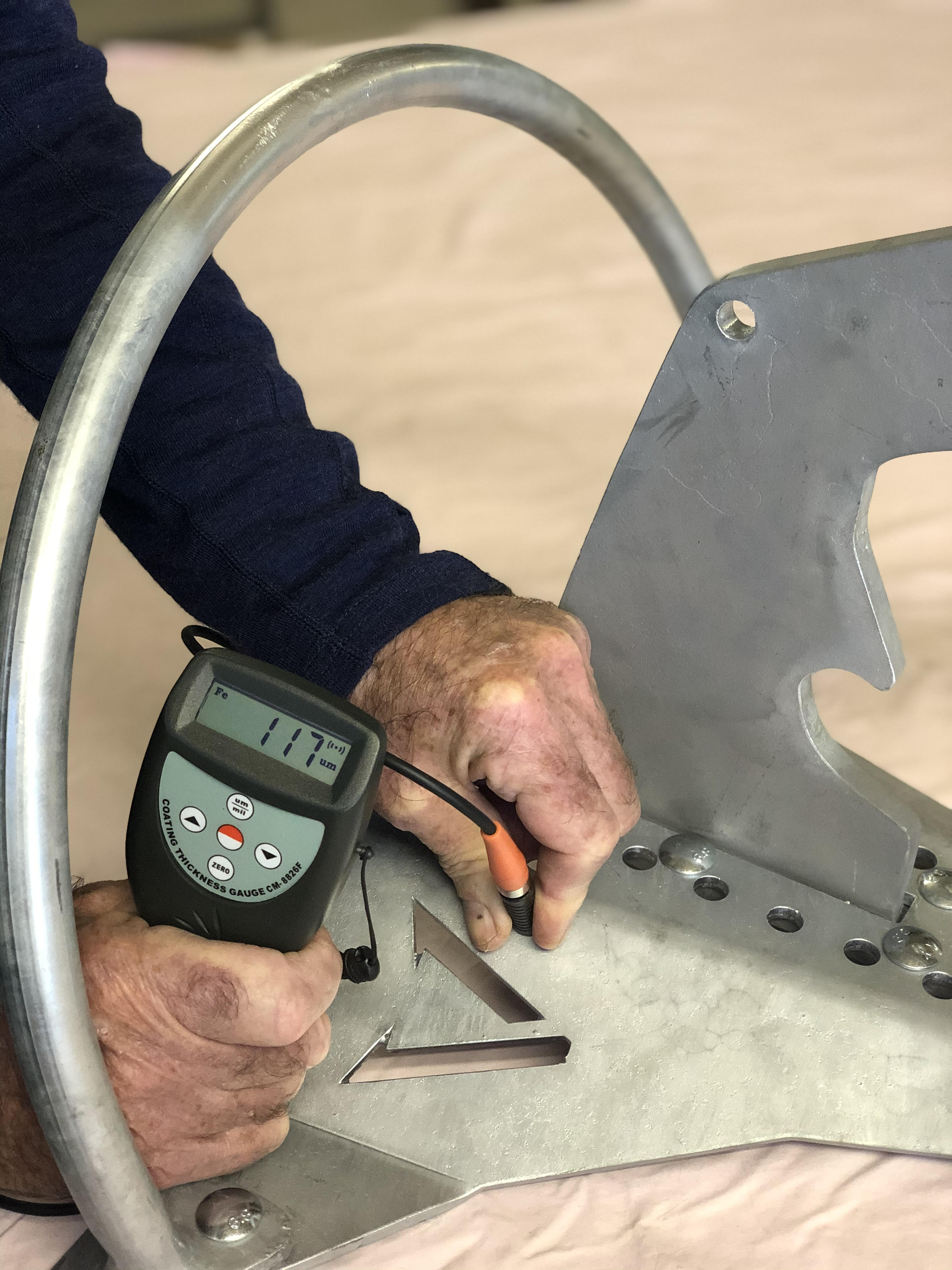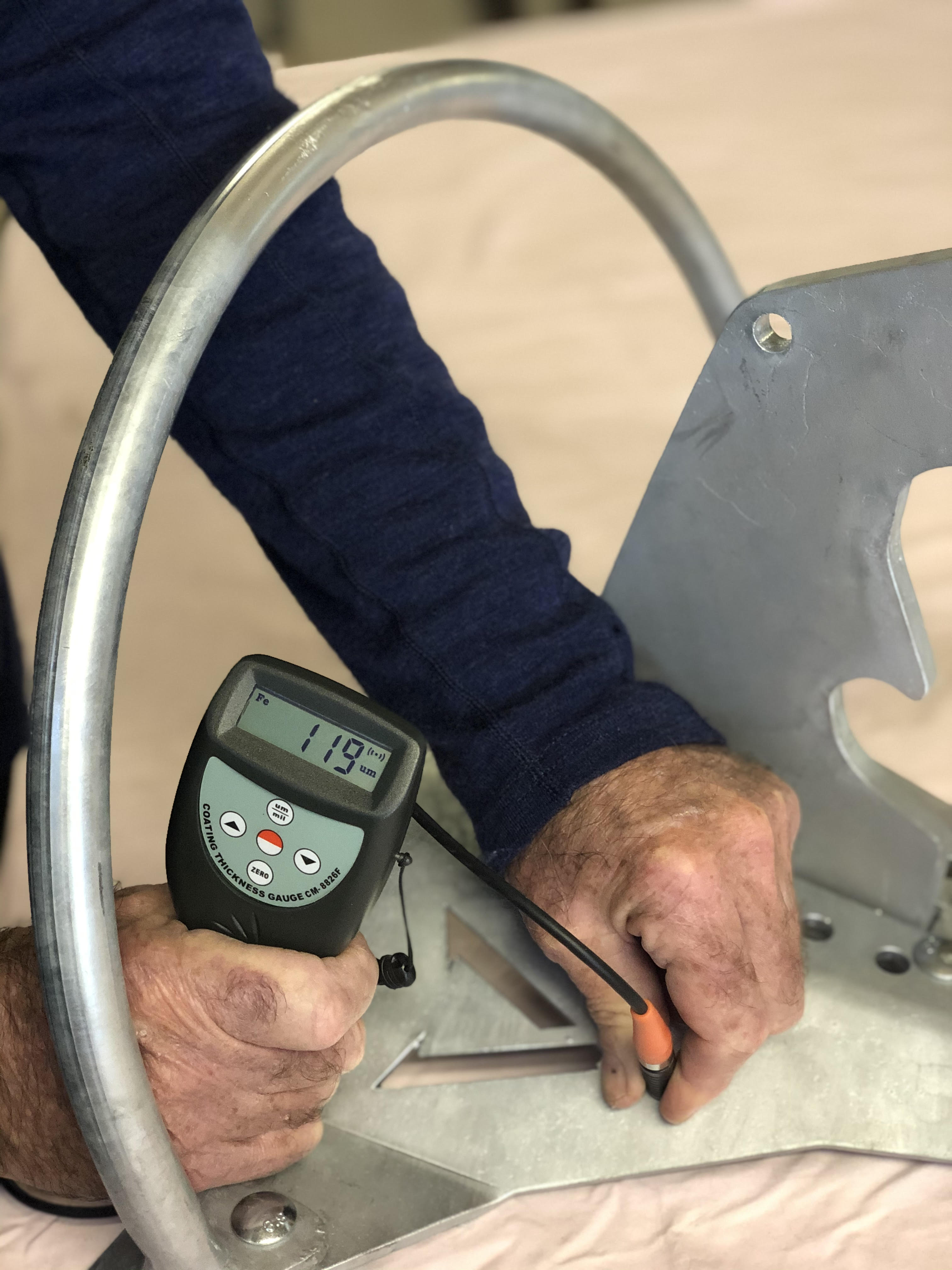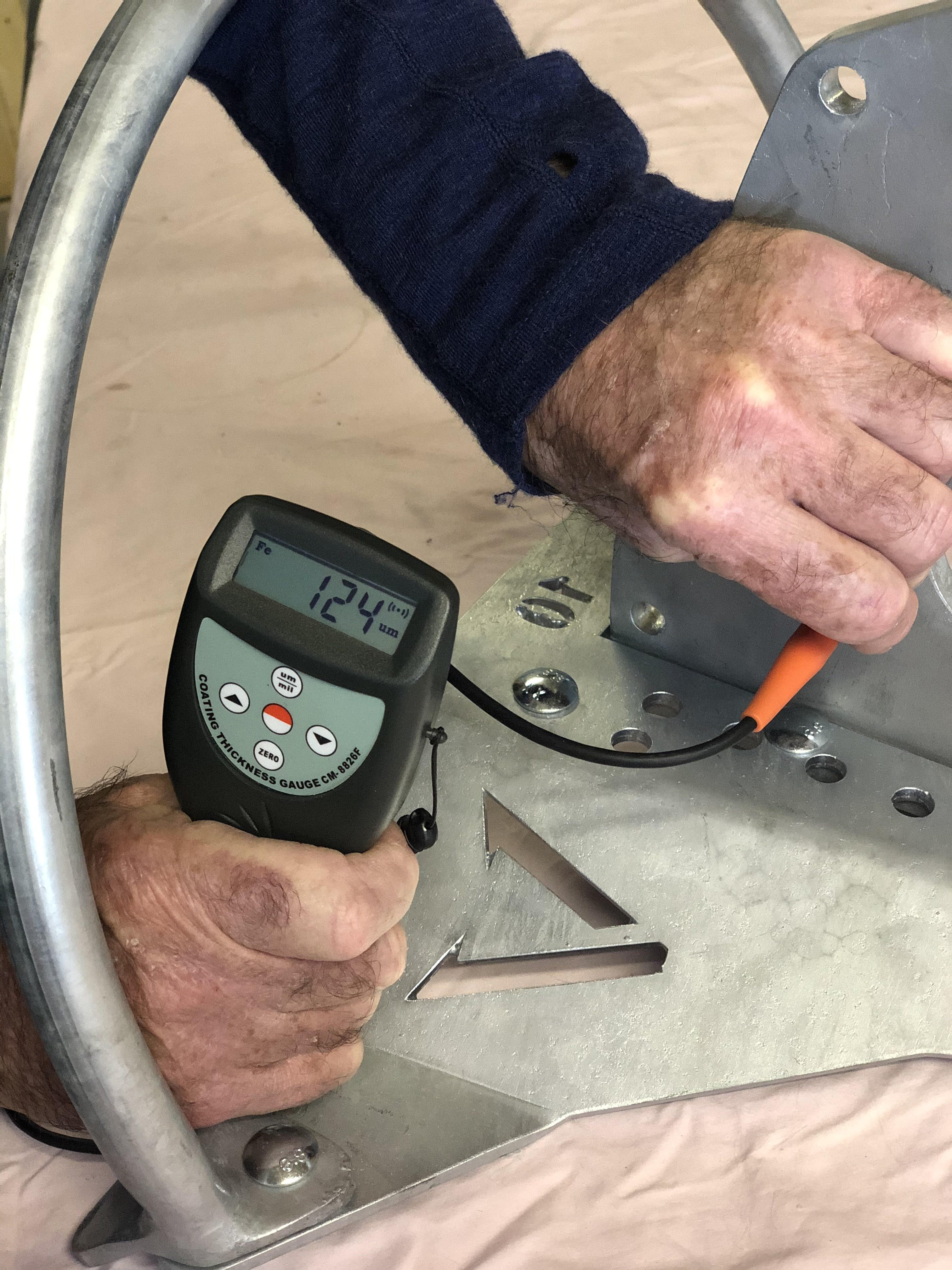
Anchors should last ‘forever’ but the galvanizing will wear off and the reality is - galvanizing life determines anchor life. You can rejuvenate the life of an anchor by painting, but the paint lasts only for a very short time. You can also re-galvanize your anchor but that is not always very easy as most galvanizers are geared up for bulk, not one anchor. A painted anchor is really most unpopular for a galvanizer as the paint is very difficult to remove and a painted surface will not accept a galvanized coating.
We have tried to ensure we are maximizing galvanizing life. It is well known that galvanizing life is part of a function of abrasion resistance and the thicker the galvanizing coating the longer the life. However, too thick a coating and the coating can peel. The coating can also be lost if the underlying steel is not cleaned properly. The galvanized acting is this a compromise, too thin and it abrades quickly, too thick and it might peel.
A normal minimum specification for galvanized coating thickness for engineering products is 70 microns. However, most engineering products are not subject to abrasion, especially being dragged through and into the seabed. We at Viking have focussed on an average minimum galvanized thickness of 100 microns and we check each batch of anchors. The coating thickness does vary - it's a function of the hot-dipped galvanizing process. We try to minimize the amount of raw zinc on the outside of the anchor - raw zinc is pretty (it's shiny) but soft and soon wears off. We prioritize the development of the Fe/Zn alloys (the formation of which is the basis of the process) as it is these alloys that are hard and offer the best corrosion and abrasion protection.
Unlike other suppliers of anchors, we do want to ensure our products have longevity and for this reason, we test our anchors for galvanized coating thickness and are proud to focus on a 100-micron average minimum thickness.
Buy your new Viking anchor here